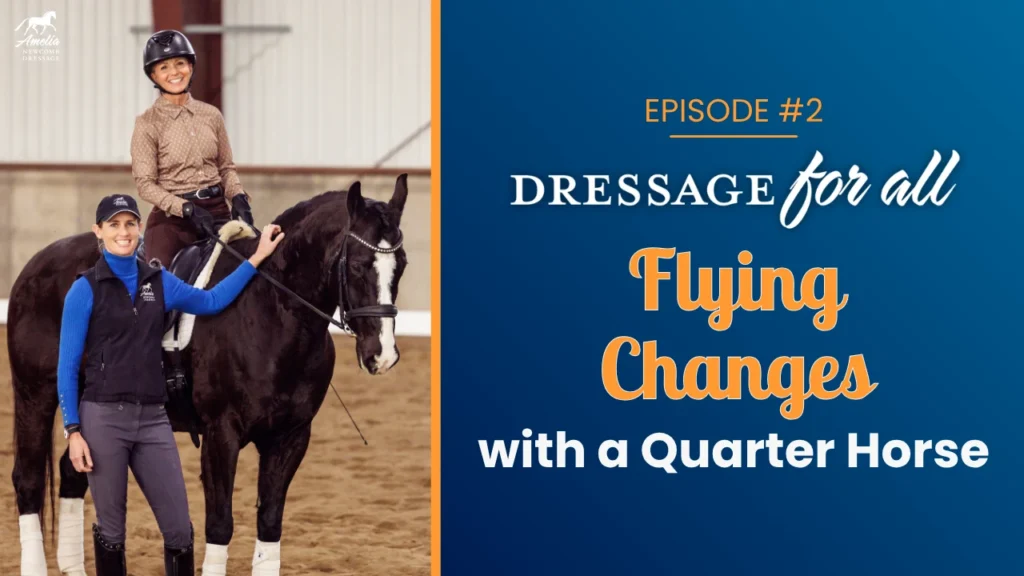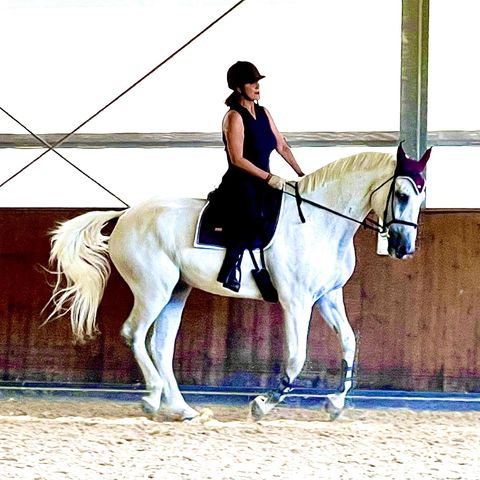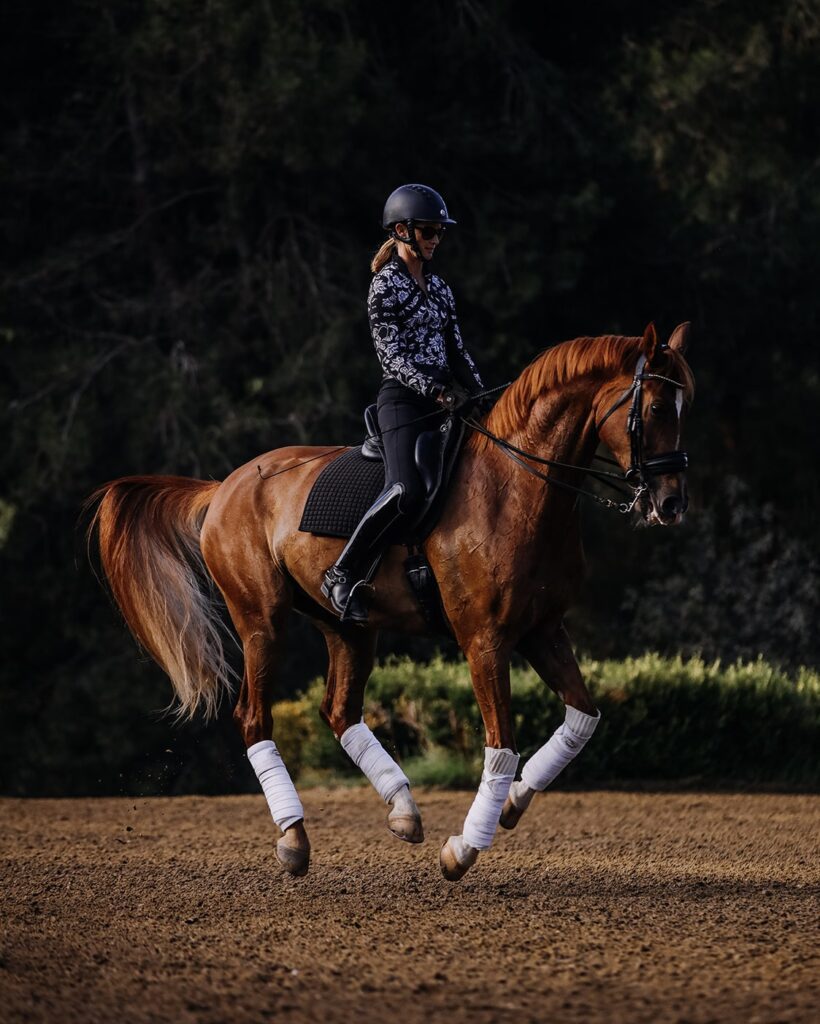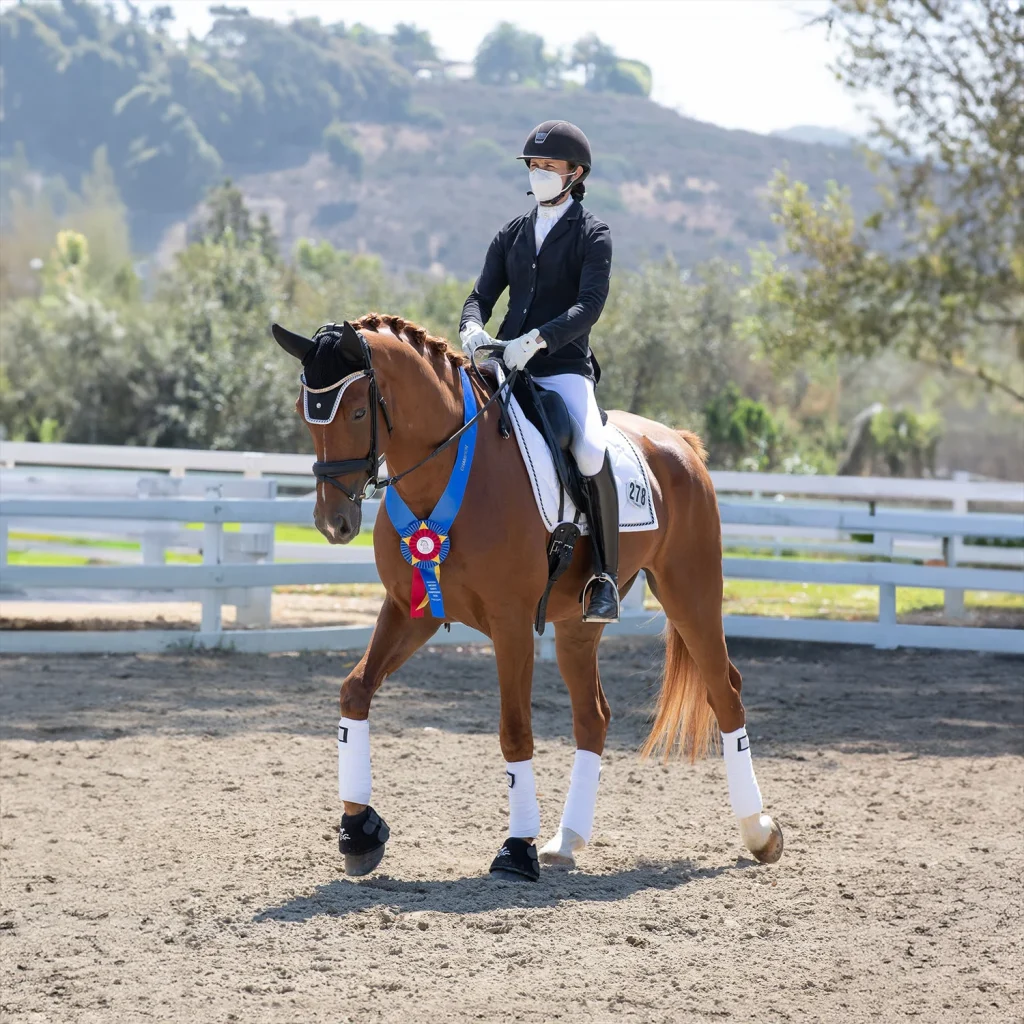
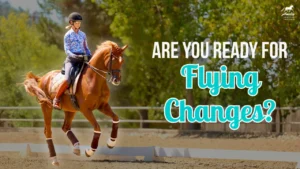
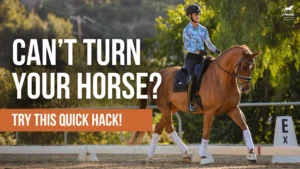









Before you canter across the diagonal and hope for the best, there’s real preparation work before you ask for a flying change. So many riders decide that today is the day for flying changes, without understanding the steps that actually set them up for success. In this video, I walk through the prerequisite exercises I use before asking any horse for a flying change.
Before we dive in, if you want the full step-by-step process, I have a Flying Changes webinar that also goes into details about the biomechanics, aids, and more about the Flying Changes. In this webinar, you will learn:
– Any horse can learn to do a clean flying change… follow my step-by-step system.
– Canter quality and clear aids are key to successful flying changes.
– On the diagonal is the WORST place to train flying changes…
Why Trot-Canter-Trot Transitions Come First
A flying change is really just a canter transition, except your horse stays in the canter instead of coming back to trot or walk. That’s why trot-canter-trot transitions come first, even with my Grand Prix horses.
What I’m looking for:
- Obedient, prompt transitions off a light aid
- Transitions that start from the hind leg, not a rush or a fall into gait
- No hesitation or coming above the bit
- Both directions working equally well
If your horse is inconsistent here, that same issue will show up magnified in the flying change.
Walk-Canter-Walk Transitions Build the Sitting Power
Once trot-canter-trot feels easy, the next step is walk-canter-walk transitions. This is where your horse really starts to sit and engage the hind end, which is exactly what a clean flying change needs.
Why this matters:
- The aid for walk to canter is essentially the same aid used for the flying change
- Better walk-canter transitions directly mean a better flying change
- Aim for transitions that are an A-plus, not just “fine”
Setting Up the Pattern for the Change
Once the basics are solid, it’s time to add pattern work. I use what I call the half circle exercise, turning like you’re heading up the center line, starting with simple changes before asking for the flying change.
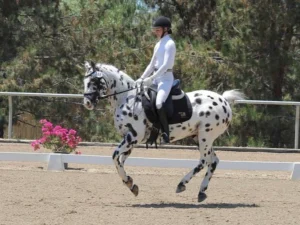
Key tips for pattern work:
- Ride simple changes at the same spot each time (“X marks the spot”)
- Vary your patterns over time so your horse doesn’t anticipate the change
- Use counter flexion if needed to move your horse off your leg toward the stiffer side
Watch the full episode to see this progression in real time, transitions, patterns, and the honest work still left to improve.
Happy Riding!
Amelia
P.S. If this gave you a better sense of what goes into flying changes, don’t forget to RSVP for my Flying Changes Webinar for all the setups and exercises to help set you and your horse up for success.